
The Art of Motion: History, Evolution, and Impact of Animation

From the flicker of prehistoric cave paintings to the breathtaking realism of modern photorealistic CGI, humanity has always been obsessed with one magical concept: bringing the inanimate to life. This is the essence of animation—a word derived from the Latin animare, meaning “to give life.” Today, animation is not just a genre for children; it is a multi-billion-dollar global industry, a profound medium of artistic expression, and a vital tool in education, advertising, and technology.
1. The Dawn of Motion: A Brief History Long before computers or even film cameras existed, humans attempted to capture the illusion of movement.

Ancient artisans decorated pottery with sequential drawings that appeared to move when the vessel was spun. However, the true foundations of animation were laid in the 19th century with the invention of optical toys. Devices like the Phénakisticope (1833) and the Zoetrope (1866) used spinning discs or cylinders with slits to trick the human eye into seeing continuous motion from a series of static images—a phenomenon known as the persistence of vision.
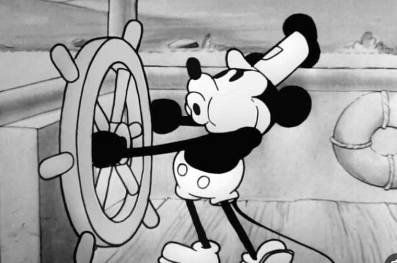
The early 20th century marked the birth of cinema, and with it, traditional animation. French caricaturist Émile Cohl’s Fantasmagorie (1908) is widely considered the first fully animated film. However, it was Walt Disney who revolutionized the industry. In 1928, Disney introduced Steamboat Willie, featuring Mickey Mouse, which was the first cartoon with synchronized sound. A decade later, in 1937, Disney released Snow White and the Seven Dwarfs, proving that audiences could emotionally connect with a full-length, hand-drawn animated feature. This kicked off the “Golden Age of Animation,” giving rise to iconic studios like Warner Bros. hi anime (Looney Tunes) and Metro-Goldwyn-Mayer (Tom and Jerry).
2. The Core Techniques of Animation As technology evolved, so did the methods used to create animation. Today, the medium is generally categorized into four primary techniques:
A. Traditional (Cell) Animation The classic method where every single frame is drawn by hand on paper. To save time, animators eventually began tracing these drawings onto clear plastic sheets called cels, which were then layered over painted backgrounds.
C. Stop-Motion Animation A physically demanding technique where real-world objects, clay figures (Claymation), or puppets are manipulated by hand. Animators move the object a fraction of a millimeter, take a photo, and repeat. When played sequentially, the objects appear to move on their own. Masterpieces like The Nightmare Before Christmas and Laika Studios’ Coraline showcase the tactile beauty of this medium.
D. 3D Computer-Generated Imagery (CGI) The dominant force in modern cinema. Instead of drawing, 3D animators build digital models in a virtual 3D space using software like Blender, Maya, or Unreal Engine. In 1995, Pixar’s Toy Story made history as the first fully computer-animated feature film, fundamentally changing the landscape of cinema forever.